

 English
 Español
 हिंदी
हिंदी Tiếng Việt
Industry News
 Home / News / Industry News / How does a chamber filter press work? This article will guide you through its efficient filtration cycle
 How does a chamber filter press work? This article will guide you through its efficient filtration cycle
 2026.03.02
 Industry News
Content
- 1 1. What is a Chamber Filter Press? Why is it Indispensable in Industrial Wastewater Treatment?
- 2 2. Chamber vs. Plate and Frame Filter Press: Which Model Fits Your Filtration Needs?
- 3 3. How a Chamber Filter Press Works: A Guide to the High-Efficiency Filtration Cycle
- 4 4. Factors Influencing Chamber Filter Press Pricing: How to Get the Best ROI?
- 5 5. High Cake Moisture Content? 5 Solutions to Efficiency Issues in Chamber Filter Presses
1. What is a Chamber Filter Press? Why is it Indispensable in Industrial Wastewater Treatment?
Detailed Content:
In the modern industrial ecosystem, wastewater treatment is no longer just a regulatory hurdle; it is a critical component of resource recovery and operational sustainability. The Chamber Filter Press stands as the definitive solution for high-efficiency solid-liquid separation, specifically designed to transform high-water-content industrial sludge into manageable, dry filter cakes through powerful mechanical pressure.
The “indispensability” of this equipment is rooted in three primary factors. First is its unrivaled solids handling capacity. Unlike vacuum filters or centrifugal decanters, a chamber filter press can process slurries with extremely fine particles and high viscosity. By utilizing a heavy-duty hydraulic system, it ensures that the moisture content of the resulting filter cake is minimized to the lowest possible levels, which is vital for reducing disposal costs.
The equipment offers exceptional chemical stability. In sectors like electroplating, chemical manufacturing, or pharmaceuticals, the slurry is often highly acidic or alkaline. Modern chamber filter plates are typically constructed from reinforced polypropylene (PP), which provides superior corrosion resistance, allowing the machine to operate in harsh environments for decades without structural degradation.
From an environmental compliance perspective, global standards for sludge landfilling and discharge are becoming increasingly stringent. Traditional sedimentation tanks are no longer sufficient for the “sludge reduction” requirements of the 21st century. The chamber filter press significantly shrinks the volume of waste, facilitating “water reuse” and “solid waste minimization.” Whether in a municipal sewage plant, a textile dyeing factory, or a mining site, it serves as the final, most critical line of defense in the environmental protection chain.
2. Chamber vs. Plate and Frame Filter Press: Which Model Fits Your Filtration Needs?
Detailed Content:
When selecting filtration equipment, many procurement managers find themselves torn between the Chamber (Recessed Plate) design and the traditional Plate and Frame design. While they may appear similar at a glance, their structural engineering and ideal application scenarios differ significantly.
The Plate and Frame Filter Press consists of solid plates and hollow frames arranged alternately. Its primary advantage lies in the ease of filter cloth replacement and its ability to accommodate thick filter paper. This makes it ideal for “polishing” or “fine filtration” operations in laboratories, fine chemicals, or the food and beverage industry (such as filtering syrups or vegetable oils) where extreme clarity of the liquid is the priority.
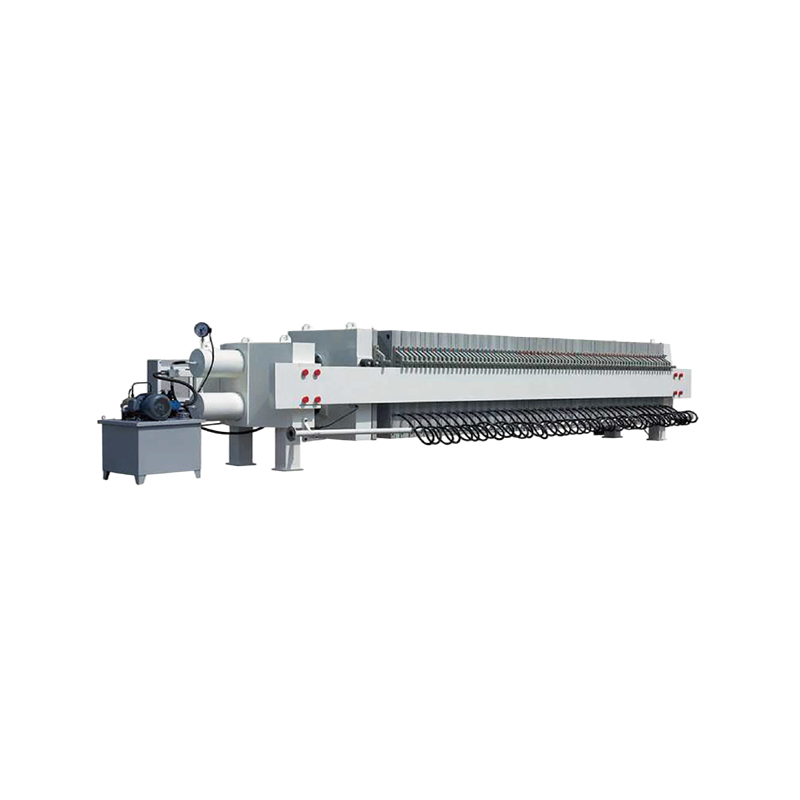
The Chamber Filter Press has evolved to become the mainstream choice for heavy industrial applications. In this design, the filter plates are recessed in the center; when two plates are clamped together, they automatically form a self-contained filtration chamber. The advantages of this structure include:
- Higher Pressure Resistance:The integrated structure of chamber plates is more stable under high clamping forces, allowing the machine to handle feed pressures of 1.0 to 2.0 MPa (or higher), resulting in much drier cakes.
- Superior Automation:Chamber presses are perfectly suited for automatic plate-shifting systems. Because the filter cloth is hung directly on the plate, the cake releases more easily during the discharge phase, reducing manual labor.
- Lower Maintenance Costs:By eliminating the separate “frame” component, there are fewer sealing surfaces, which drastically reduces the risk of “spraying” or leakage during high-pressure cycles.
If your goal is to process large volumes of high-concentration industrial sludge or mining tailings efficiently, the chamber filter press is undoubtedly the more robust and cost-effective choice.
3. How a Chamber Filter Press Works: A Guide to the High-Efficiency Filtration Cycle
Detailed Content:
Understanding the operational cycle of a chamber filter press is essential for operators to optimize performance and maximize throughput. A complete filtration cycle is generally divided into the following five stages:
Stage 1: Mechanical Clamping. The cycle begins when the hydraulic station is activated, driving the moving plate (follower) toward the stack of filter plates. Because the edges of the plates are equipped with precision-machined sealing surfaces or gaskets, they form a series of liquid-tight, independent chambers under high pressure. This secure seal is a prerequisite for the high-pressure injection that follows.
Stage 2: Feeding and Filtration. The slurry pump injects the mixture through the central feed port. As the chambers fill, the liquid (filtrate) is driven by the pump’s pressure to pass through the filter cloth. The solids are trapped, while the liquid is directed through the grooves on the plate surface and out through the discharge ports.
Stage 3: Pressure Consolidation. As solids accumulate, the resistance within the chambers increases. The pump reaches its maximum rated pressure, entering the “cake formation” phase. This is the critical moment where the interstitial water between particles is squeezed out, determining the final dryness of the solids.
Stage 4: Cake Washing (Optional). In industries where the purity of the solid is paramount or where valuable chemicals must be recovered from the liquid, a washing system can be used. Water or a solvent is pumped through the cake to displace any remaining mother liquor.
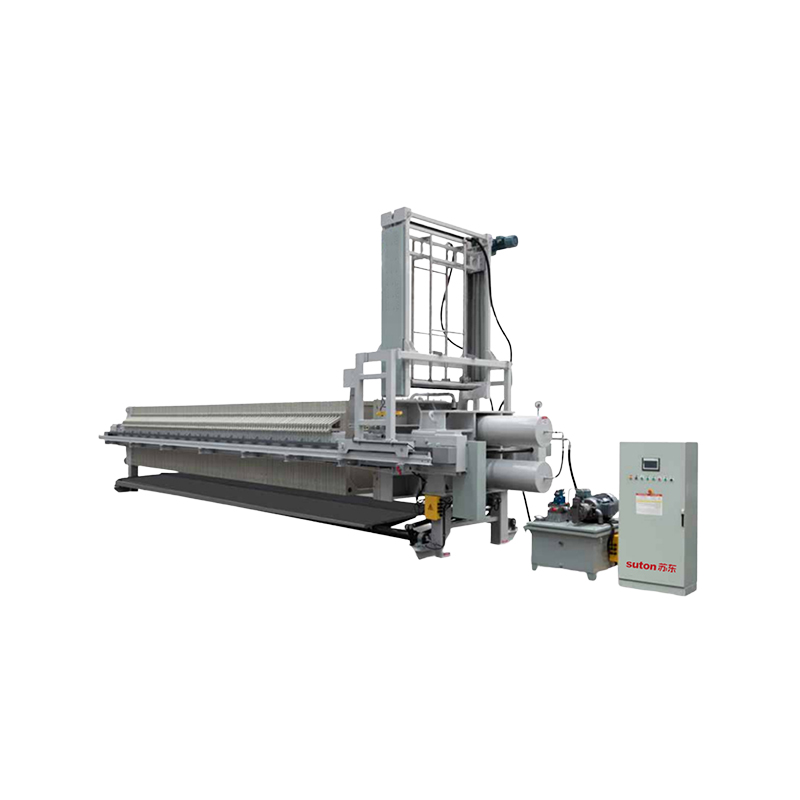
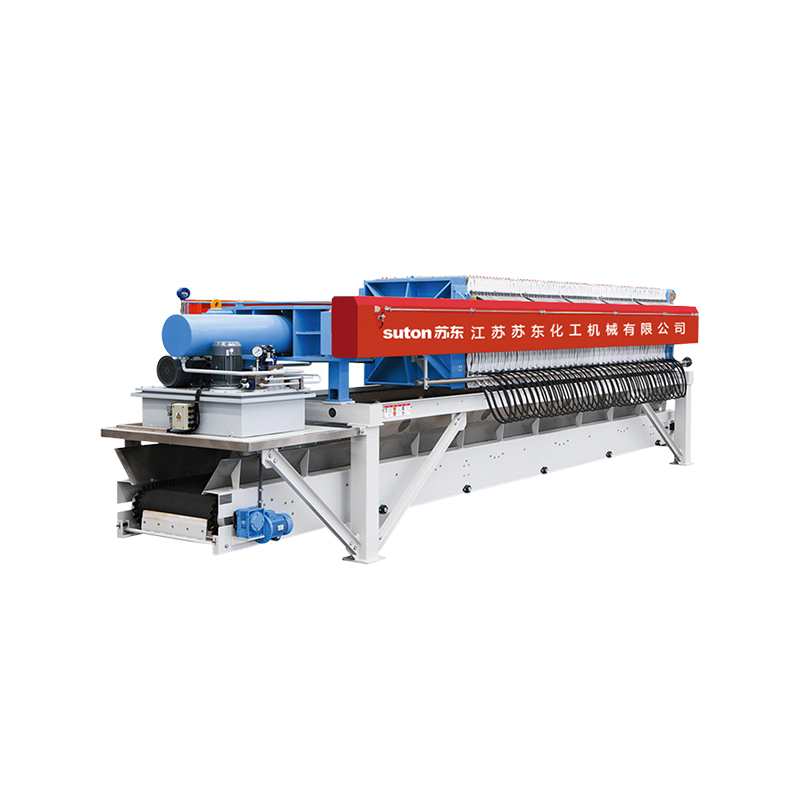
Stage 5: Cake Discharge. Once the cycle is complete, the hydraulic pressure is released, and the ram retracts. Using a manual or automatic plate shifter, the plates are separated one by one. Under the influence of gravity, the dry filter cakes detach from the cloth and fall into a hopper or conveyor below, leaving the machine ready for the next cycle.
4. Factors Influencing Chamber Filter Press Pricing: How to Get the Best ROI?
Detailed Content:
When requesting a quote for a chamber filter press, you will notice a significant price range in the market. This is rarely a matter of simple brand markup; rather, it is dictated by several core technical specifications that impact the long-term Return on Investment (ROI).
The most fundamental factor is the Filtration Area and Chamber Volume. This defines the scale of the machine. A press with a 1000㎡ filtration area requires significantly more steel for the frame and a much larger number of filter plates than a 10㎡ unit, naturally increasing the material and manufacturing labor costs.
The Material and Manufacturing Quality of the Filter Plates play a huge role. There is a vast price gap between standard polypropylene plates and high-pressure membrane plates. If your process requires extremely dry cakes, you may need “Membrane Squeezing” functionality, which uses flexible membranes to physically compress the cake. Furthermore, plates designed to withstand high temperatures or highly corrosive chemicals require premium-grade raw materials, which increases the initial price but prevents frequent replacements.
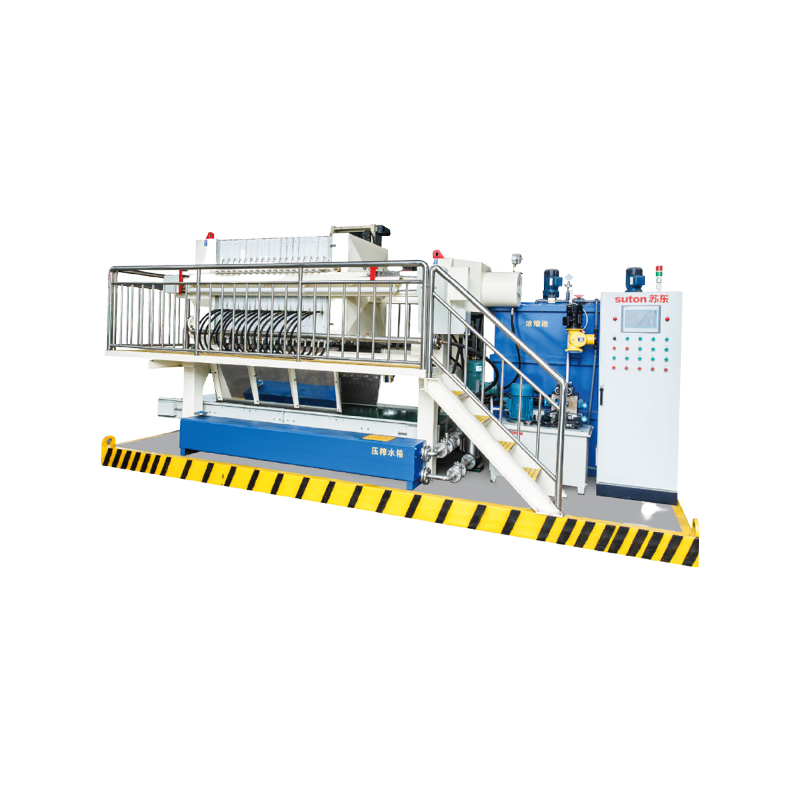
The Level of Automation is a major price driver. A basic manual press is significantly cheaper than a fully automated system equipped with automatic plate shifters, automatic cloth washing systems, drip trays (bomb bay doors), and PLC remote control integration. While the upfront cost of automation is higher, it drastically reduces labor costs and minimizes the risk of human error or injury.
Our Tip for Best Value: Do not focus solely on the lowest purchase price. Instead, calculate the “cost per ton of treated waste.” Choosing a manufacturer that provides robust after-sales support and high-quality wear parts will always yield a better ROI than saving on the initial capital expenditure.
5. High Cake Moisture Content? 5 Solutions to Efficiency Issues in Chamber Filter Presses
Detailed Content:
A filter cake that is too wet is the most common operational headache in the filtration industry. Wet cakes increase transportation costs and may lead to non-compliance with environmental disposal standards. To solve this pain point, consider the following five optimization strategies:
- Optimize Feeding Pressure and Duration:Many operators stop the feeding pump before it reaches the rated pressure peak. Ensure your feed pump’s head is matched to the filter press’s design pressure. Maintaining a “high-pressure hold” at the end of the cycle is the physical foundation for a dry cake.
- Check Filter Cloth Permeability:The filter cloth is the “lungs” of the press. If the cloth is blinded by fine particles or chemical scaling, the liquid cannot escape. Regularly clean the cloths using high-pressure water systems or replace them with the correct weave (e.g., monofilament vs. multifilament) suited to your specific slurry characteristics.
- Slurry Pre-treatment (Conditioning):If the slurry is too viscous or the particles are too fine, direct filtration will be inefficient. Adding flocculants (such as PAM or PAC) allows fine particles to aggregate into larger “flocs,” which creates a more porous cake structure and significantly improves dewatering speed.
- Utilize Air Blowing (Core Blow):Incorporating a “core blow” or “cake blow” step at the end of the cycle can be a game-changer. By forcing compressed air through the cake, you can mechanically drive out the capillary water trapped between particles, which is often the most cost-effective way to drop moisture levels by an additional 3-5%.
- Upgrade to Membrane Squeezing:If the above methods are insufficient, consider upgrading to membrane filter plates. By inflating a membrane with high-pressure water or air to perform a secondary physical squeeze on the cake, you can reduce moisture content by an additional 10-20% compared to standard chamber plates.

Contact Information
 No. 1, Sudong Road, Guxi Town, Taixing, Jiangsu, China
 +86-15720778188
 +86-523-87791016
 +86-523-87797781
 [email protected]

;void(0))