

 English
 Español
 हिंदी
हिंदी Tiếng Việt
Industry News
 Home / News / Industry News / How Does a Filter Press Work? A Step-by-Step Guide for Industrial Operations
 How Does a Filter Press Work? A Step-by-Step Guide for Industrial Operations
 2026.05.18
 Industry News
Content
- 0.1 Step 1: The Clamping Phase (Building the Foundation)
- 0.2 Step 2: The Feeding Phase (The Core Separation Begins)
- 0.3 Step 3: Cake Building and Consolidation
- 0.4 Step 4: Membrane Squeezing (Optional but Critical for Efficiency)
- 0.5 Step 5: Air Blowing and Core Wash
- 0.6 Step 6: Cake Discharge and Cleaning
- 1 Comparison of Filter Press Performance Parameters
In the industrial world, the filter press is a cornerstone piece of equipment for high-efficiency solid-liquid separation. Whether it is handling mine tailings, purifying chemical products, or dewatering municipal sludge, the fundamental principle remains the same: using pressure to drive liquid through a medium while trapping solids within a chamber. To help industrial operators and procurement decision-makers better understand this complex process, we have broken down the cycle into six critical stages.
Step 1: The Clamping Phase (Building the Foundation)
Before any slurry can enter the system, a completely sealed pressure vessel must be established.
Hydraulic Closing Mechanism
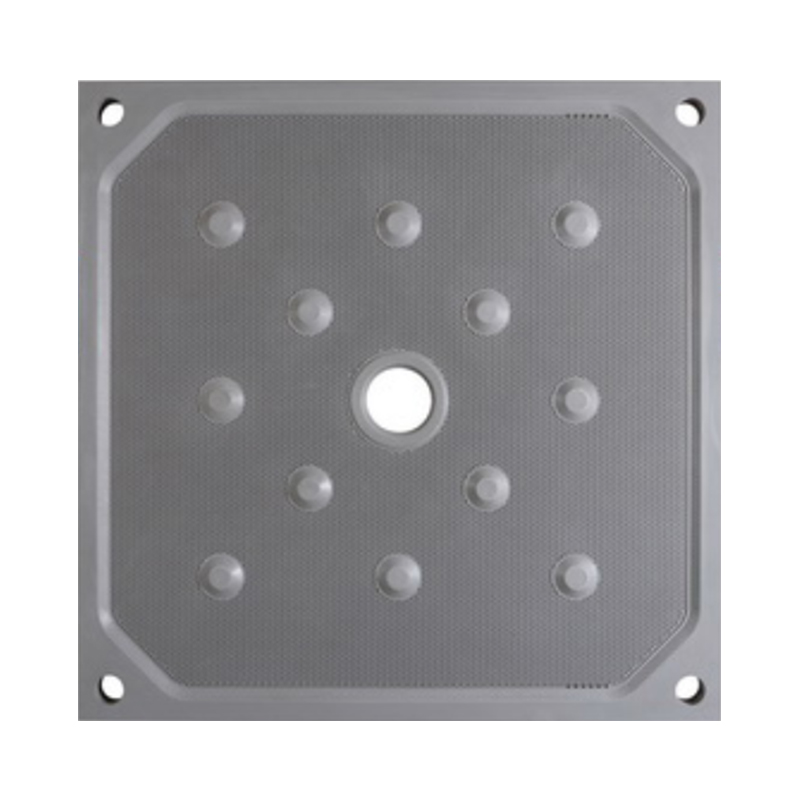
A filter press consists of a series of filter plates arranged side-by-side. A powerful hydraulic cylinder drives the moving plate (the follower) to press all the filter plates tightly against the stationary end plate (the stay plate).
The Importance of Clamping Force
This step is vital because the subsequent pumping process generates immense internal pressure (typically between 7 bar and 20 bar). If the clamping force is insufficient, “wicking” or spraying occurs between the plates. This leakage not only reduces filtration efficiency but can also damage the edges of the filter cloths. Modern automated presses often feature pressure compensation systems to ensure the clamping force remains constant throughout the entire cycle.
Step 2: The Feeding Phase (The Core Separation Begins)
Once the chambers are securely sealed, the cycle enters the filling or feeding stage.
The Role of the Feed Pump
The slurry—a mixture of liquid and solids—is pumped through the center feed port into the empty chambers formed by the adjacent filter plates. Progressive cavity pumps or air-operated double diaphragm (AODD) pumps are typically used because they can provide steady pressure.
Solids Retention & Filtrate Flow
As the slurry fills the chambers, the liquid (filtrate) is forced through the filter cloth, enters the drainage grooves on the face of the plates, and exits through discharge manifolds. Meanwhile, the solid particles are trapped on the surface of the cloth. At this stage, you will observe the highest flow rate of filtrate because the cloth is clean and resistance is at its lowest.
Step 3: Cake Building and Consolidation
As filtration progresses, the trapped solids begin to accumulate on the filter cloth, forming what is known as the “filter cake.”
Self-Filtration Phenomenon
An interesting technical detail is that as the cycle continues, the primary filtration medium is no longer just the cloth, but the initial layer of the cake itself. As the cake thickens, it becomes a highly efficient filter bed capable of trapping even finer micro-particles than the cloth pores could alone.
Pressure Spike and Flow Drop
As the chambers become packed with solids, the resistance to the incoming slurry increases. The feed pump pressure rises accordingly, while the flow rate of the filtrate gradually slows down. When the flow drops to a pre-set minimum threshold, it indicates the chambers are full, and the feeding process ends.
Step 4: Membrane Squeezing (Optional but Critical for Efficiency)
If you are operating a Membrane Filter Press, a secondary “squeeze” step occurs after the feeding stops.
Secondary Compression
By injecting compressed air or high-pressure water into the internal membranes of the plates, the membranes expand into the chamber. This physically compresses the filter cake, forcing out residual moisture trapped between the solid particles.
Benefits of Lower Moisture
This step typically reduces the cake’s moisture content by an additional 5% to 15%. For materials that require subsequent thermal drying or long-distance transport, this saves a significant amount of energy and logistics costs.
Step 5: Air Blowing and Core Wash
To ensure maximum dryness and to clean the internal piping, an air blow-down is performed.
Removing Free Water
Compressed air is introduced into the feed channel and through the cake itself to carry away any remaining free water. Additionally, a “Core Blow” clears out any unfiltered slurry remaining in the center feed pipe, preventing it from contaminating the dry cakes during the discharge phase.
Step 6: Cake Discharge and Cleaning
Finally, the hydraulic system retracts the follower, and the plates are separated.
Automatic vs. Manual Discharge
In automated systems, a plate shifter moves the plates one by one, allowing the solid cakes to fall by gravity into a hopper or onto a conveyor belt. If the cake is particularly sticky, operators may assist manually, or automatic cloth-shaking mechanisms may be triggered.
Comparison of Filter Press Performance Parameters
To help you understand the performance differences based on equipment configuration, the following table compares standard Chamber presses with high-efficiency Membrane presses:
|
Performance Parameter |
Chamber Filter Press |
Membrane Filter Press |
Operational Impact |
|
Cycle Time |
Longer (2-4 Hours) |
Short (1-1.5 Hours) |
Production Throughput |
|
Cake Moisture |
25% - 35% |
15% - 25% |
Transport/Drying Costs |
|
Feed Pressure |
Max 7-10 bar |
Up to 20 bar (with squeeze) |
Filtration Depth |
|
Material Suitability |
General-purpose, low viscosity |
Difficult, high-value fine powders |
Versatility |
Frequently Asked Questions (FAQ)
Q1: How do I know when the filtration cycle is finished?
A: There are usually two indicators: first, the feed pressure reaches the pump’s relief set point; second, the filtrate discharge slows to a very small trickle. Automated systems use a “flow-stop” sensor to trigger the end of the cycle.
Q2: Why is the center of my filter cake always wet?
A: This is usually caused by an incomplete “Core Blow” or insufficient feed pressure preventing the chambers from filling completely. If using a membrane press, ensure the squeeze pressure is reaching the required set point.
Q3: How often should I wash the filter cloths?
A: This depends on the slurry characteristics. If you notice high pressure with almost no filtrate flow, the cloths are likely “blinded” (clogged). A high-pressure water wash is typically recommended every 50 to 100 cycles.
Q4: What causes “spraying” or leaking between the plates?
A: Common causes include residual cake on the sealing surfaces, folded or wrinkled filter cloths, insufficient hydraulic pressure, or warped plates. You should stop the machine immediately and clean the sealing faces to prevent permanent plate erosion.
Contact Information
 No. 1, Sudong Road, Guxi Town, Taixing, Jiangsu, China
 +86-15720778188
 +86-523-87791016
 +86-523-87797781
 [email protected]

;void(0))