

 English
 Español
 हिंदी
हिंदी Tiếng Việt
Industry News

How to Choose the Right Filter Press Plates for Your Specific Slurry?
 2026.03.16
 Industry News
Content
- 1 1. Understanding Your Slurry Characteristics
- 2 2. Comparing Plate Designs: Recessed Chamber vs. Membrane
- 3 3. Material Science: How to Optimize ROI through Material Choice
- 4 4. Technical Specifications: Porting and Drainage Optimization
- 5 5. Making an Informed Investment
- 6 FAQ: Frequently Asked Questions
- 7 References
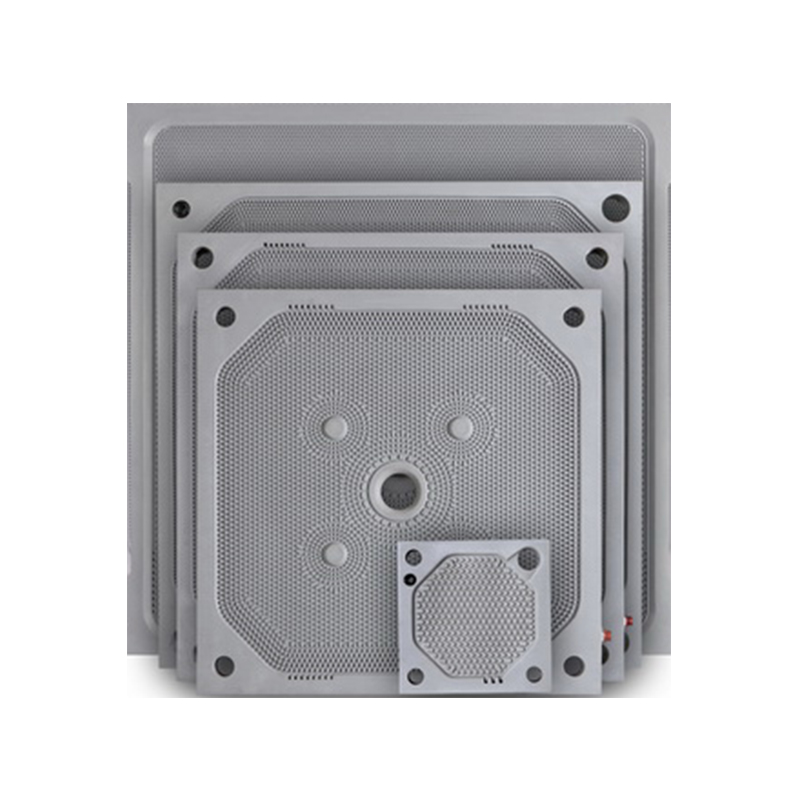
In the field of industrial liquid-solid separation, the selection of Filter Press Plates is the most critical factor in determining production efficiency, final cake moisture content, and long-term operational costs. As the core component of the filter press, these plates must not only withstand immense hydraulic clamping forces but also maintain structural integrity under extreme chemical environments and temperature fluctuations.
For plant managers and engineers, choosing the right plate is not just a simple replacement—it is a precise calculation of the Total Cost of Ownership (TCO).
1. Understanding Your Slurry Characteristics
The first step in plate selection is a deep analysis of the feed slurry. The physical and chemical properties of your material serve as the foundation for choosing the right plate material and configuration.
1.1 Chemical Compatibility and pH Levels
The acidity or alkalinity (pH value) of the slurry is the primary filter for material selection. Industrial wastewater, mining tailings, and chemical intermediates often contain highly corrosive agents. While Reinforced Polypropylene (PP) plates are the industry standard due to their excellent resistance to acids and bases, certain organic solvents or high-concentration oxidizing acids may cause standard PP to swell or degrade. In such specialized cases, engineers must evaluate modified PP with anti-oxidant additives or upgrade to premium materials like PVDF (Polyvinylidene Fluoride).
1.2 Operating Temperature and Pressure
Temperature and pressure are the “silent killers” of filter plate lifespan. Standard polypropylene plates are generally stable below 80°C. However, in processes involving high-temperature sugar refining, fine chemicals, or geothermal sludge treatment, plates are prone to thermal deformation (warping), leading to seal failure and “blowouts” (spraying). Furthermore, higher Feeding Pressure places immense stress on the internal stay-bosses. For high-pressure filtration scenarios (exceeding 16 bar), high-strength alloy steel or specialized reinforced composite materials must be utilized.
1.3 Abrasiveness and Particle Size
The hardness and shape of the solid particles in the slurry also influence plate longevity. Highly abrasive slurries, such as mineral concentrates or sand-washing waste, can accelerate the erosion of the feed ports and drainage channels. For these conditions, it is essential to select plates with thickened sealing surfaces or integrated wear-resistant sleeves at the entry ports to extend the service life of these high-value components.
2. Comparing Plate Designs: Recessed Chamber vs. Membrane
The structural geometry of the plate defines the filtration cycle time and the final dryness of the cake. The two dominant designs in modern industry are Recessed Chamber Plates and Membrane Squeeze Plates.
2.1 Recessed Chamber Plates (The Reliable Workhorse)
Recessed chamber plates are the most widely used design. They feature a concave interior on both sides, which forms a hollow chamber when two plates are clamped together.
- Advantages:Robust construction, mature manufacturing process, and lower initial capital expenditure (CapEx).
- Limitations:They rely solely on “passive filtration,” meaning the cake dryness depends entirely on the pressure generated by the feed pump.
- Best For:Standard wastewater treatment projects and basic environmental engineering where extreme cake dryness is not the primary requirement.
2.2 Membrane (Diaphragm) Plates (High-Efficiency Solutions)
Membrane plates feature a flexible, inflatable face (the diaphragm). After the initial pump-fed filtration cycle is complete, a secondary mechanical squeeze is applied by inflating the membrane with compressed air or high-pressure water.
- Advantages:Significantly lower cake moisture (often a further 5%–15% reduction), shorter total cycle times, and higher washing efficiency.
- Limitations:More complex structural design, requiring an auxiliary squeeze system (piping and controls), resulting in a higher initial investment.
- Best For:Chemical pigments, fine mineral processing, and applications where downstream thermal drying is required. Reducing moisture here can save thousands of dollars in monthly fuel costs for dryers.
2.3 Plate and Frame Designs
Although largely superseded by recessed designs, the traditional plate and frame configuration remains indispensable in laboratory settings or pharmaceutical filtration where delicate Filter Paper is used instead of standard cloth. Its flat sealing surface protects fragile media from tearing.
3. Material Science: How to Optimize ROI through Material Choice
The material of construction directly impacts replacement frequency and maintenance labor, making it the primary driver of long-term ROI.
3.1 Why Polypropylene Dominates the Market
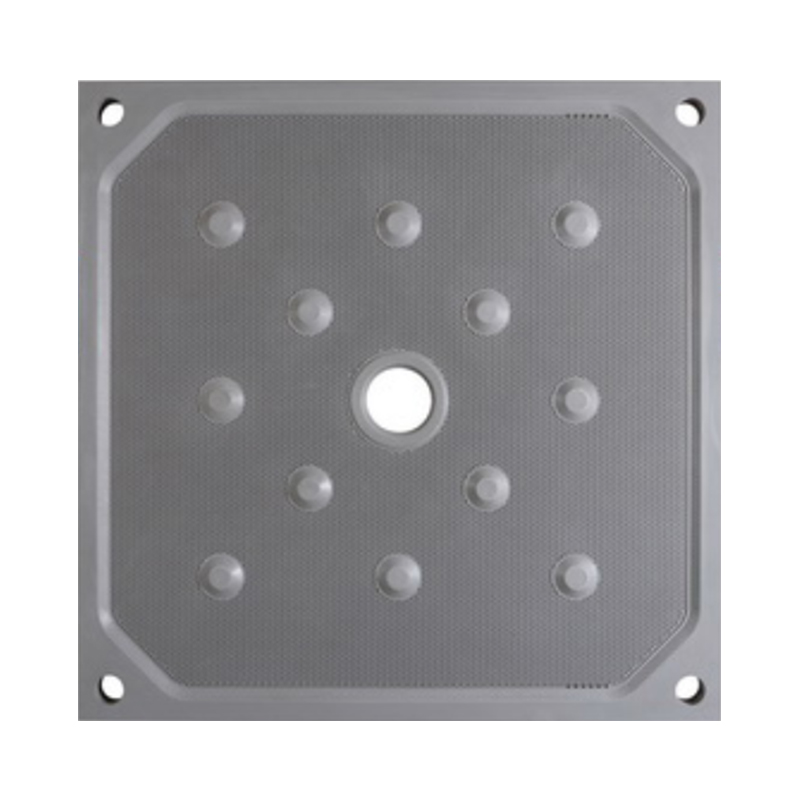
Polypropylene (PP) is favored because it strikes a perfect balance between performance and price. PP plates are lightweight (facilitating easier manual or automatic shifting), non-absorbent, and chemically inert. Modern injection-molding technology allows for the precise layout of Pips (Drainage Studs) on the plate face, ensuring smooth filtrate flow and reducing the risk of filter cloth blinding.
3.2 Metal Plates for Extreme Conditions
Under conditions of extreme high temperature (>120°C) or high pressure, metal plates (such as cast iron, stainless steel, or aluminum alloys) outperform plastics. Although heavy and expensive, their resistance to thermal “creep” makes them the only viable choice for organic oil refining and petroleum catalyst recovery.
|
Material |
Temp Limit |
Chemical Resistance |
Typical ROI Impact |
|
Standard PP |
80°C |
High (Acid/Base) |
Low initial cost, High versatility |
|
Glass Fiber PP |
100°C |
High |
Improved structural rigidity, resists warping |
|
PVDF |
120°C+ |
Exceptional |
High OpEx savings in aggressive chemical plants |
|
Stainless Steel |
200°C+ |
Moderate to High |
High durability in sanitary/food-grade apps |
4. Technical Specifications: Porting and Drainage Optimization
The porting layout and drainage design are often overlooked by non-specialist buyers, yet they are the core technical indicators of filtration speed.
4.1 Feed Port Location: Center vs. Corner
The location of the feed port affects the fluid dynamics inside the chamber. Center Feed is the most balanced design, ensuring even distribution of solids and reducing the risk of plate breakage caused by uneven pressure. Corner Feed is typically utilized in processes requiring intensive Cake Washing, as it allows for specific water flow paths to effectively displace impurities within the cake.
4.2 Open Discharge vs. Closed Discharge
- Open Discharge:Each plate is equipped with an individual faucet. Operators can visually inspect the filtrate from every single chamber. If a specific chamber yields cloudy liquid, the operator can immediately identify the torn filter cloth and shut off that faucet without stopping the entire process.
- Closed Discharge:The filtrate is collected through internal manifolds. This design is essential for volatile, toxic, flammable, or highly corrosive materials, preventing hazardous gas escape and meeting modern Health, Safety, and Environment (HSE) standards.
4.3 Stay-Boss and Pip Design
The “pips” on the plate face do more than just support the cloth; their pattern is optimized via fluid dynamics simulations to minimize frictional resistance. Properly configured Stay-bosses (internal support pillars) ensure that the plates do not suffer permanent deformation in “unbalanced” states, such as when a chamber is only partially filled.
5. Making an Informed Investment
Choosing the right Filter Press Plates is a specialized engineering task. Pursuing the lowest-cost plates often leads to high moisture content in the cake, which exponentially increases Sludge Disposal Costs. Conversely, a customized selection based on your Specific Slurry characteristics not only extends the plate lifespan but also significantly increases the throughput of your entire production line.
Before finalizing your procurement, it is highly recommended to conduct Pilot Testing with a professional manufacturer. Using real-world data to calibrate plate thickness, feed pressure, and drainage style will save you tens of thousands of dollars in potential operational and maintenance expenses.
FAQ: Frequently Asked Questions
Q1: How can I tell if my filter plates need replacing?
A: Watch for signs such as worn sealing edges (leading to spraying), broken stay-bosses, warped plate bodies, or severe erosion at the feed ports. If the filter cake thickness becomes uneven or moisture levels rise unexpectedly, it is usually a signal of plate aging.
Q2: Why is my Membrane Plate lifespan shorter than expected?
A: The lifespan of a membrane plate is heavily influenced by squeeze pressure and frequency. If the squeeze pressure exceeds the design limit, or if the squeeze is initiated before the chamber is fully filled with slurry, it can cause premature fatigue cracking of the diaphragm.
Q3: How does plate thickness affect production?
A: Plate thickness determines the depth of the chamber and, consequently, the thickness of the cake. A thicker cake means more material processed per cycle, but it also increases filtration resistance, which can lengthen the cycle time. You must find the balance based on your slurry’s specific Filtration Rate.
References
- Wakeman, R. J. (2025). Solid-Solid Separation and Filtration: Principles and Equipment Design.
- Environmental Technology Journal. “Optimization of Filter Plate Geometry for Industrial Sludge Dewatering.”
- Global Filtration News. (2024). Advancements in High-Temperature Polypropylene Formulations for Chemical Pressing.

Contact Information
 No. 1, Sudong Road, Guxi Town, Taixing, Jiangsu, China
 +86-15720778188
 +86-523-87791016
 +86-523-87797781
 [email protected]

;void(0))