

 English
 Español
 हिंदी
हिंदी Tiếng Việt
Industry News
 Home / News / Industry News / What Are the Essential Components of a Reliable Hydraulic Filter Press System?
 What Are the Essential Components of a Reliable Hydraulic Filter Press System?
 2026.03.23
 Industry News
Content
- 1 The Heavy-Duty Skeleton: Frame and Sidebar Integrity
- 2 The Heart of the System: The Hydraulic Power Unit (HPU)
- 3 Technical Comparison: Standard vs. Advanced Hydraulic Systems
- 4 The Nervous System: Control Logic and Safety Features
- 5 Filtration Environment and Oil Maintenance
- 6 FAQ: Frequently Asked Questions
- 7 References
In the modern landscape of industrial liquid-solid separation, the Hydraulic Filter Press has become the preferred choice for mining dewatering, chemical production, and large-scale wastewater treatment due to its immense clamping force and high degree of automation. A truly reliable hydraulic system does more than just “function”—it must maintain peak performance under extreme high pressure, high-frequency cycles, and harsh environmental conditions.
The Heavy-Duty Skeleton: Frame and Sidebar Integrity
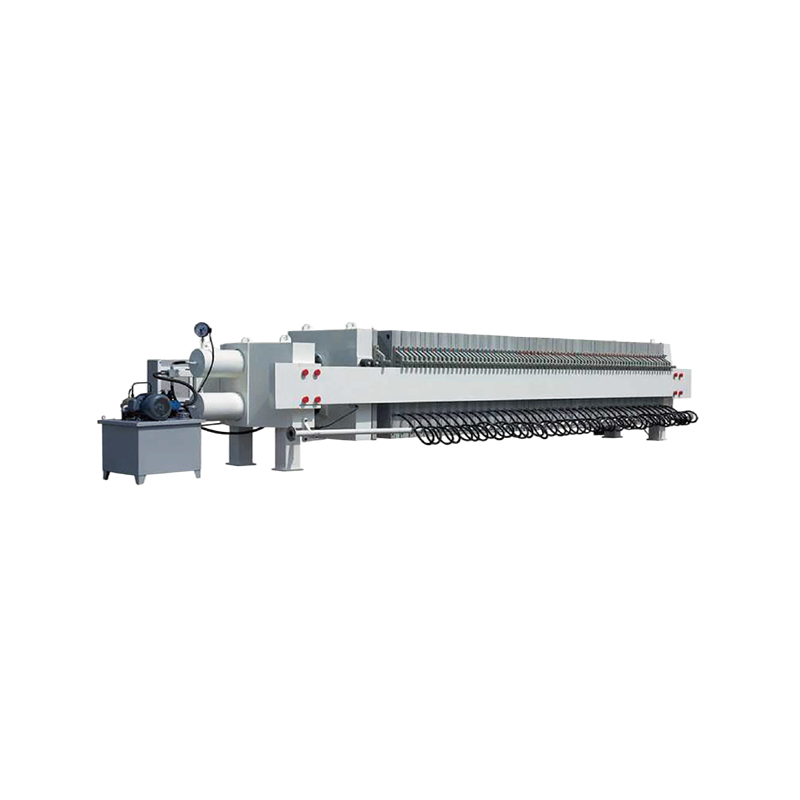
The frame of a hydraulic filter press acts as the human skeleton; it bears the brunt of tens or even hundreds of tons of thrust generated by the hydraulic cylinder. If the frame lacks sufficient rigidity, it will undergo subtle deformations under the intense feed pressure, directly leading to seal failure and “blowouts” (slurry spraying).
The Stationary Head and Moving Plate
The stationary head plate serves as the entry point for the slurry into the system and must possess exceptional flatness and compressive strength. Opposite to it is the moving plate (crosshead), which is directly coupled to the hydraulic ram. In a reliable system, the moving plate is typically constructed from heat-treated, thickened steel to ensure that force is distributed evenly across the plate pack, preventing any misalignment during the compression phase.
Sidebars: Precision Support Rails
The sidebars (support rails) do more than just carry the weight of the filter plates; they serve as the precision tracks for plate movement. High-performance hydraulic filter presses often feature sidebars covered with Stainless Steel Wear Strips. This not only prevents rust in humid environments but also minimizes frictional resistance during the plate shifting process, protecting the hydraulic system from unnecessary strain.
The Heart of the System: The Hydraulic Power Unit (HPU)
The Hydraulic Power Unit (HPU) is the “heart” of the equipment, converting electrical energy into fluid power to drive the closing, pressure-holding, and opening phases. A substandard HPU can lead to pressure fluctuations, which directly compromise cake dryness and consistency.
The High-Pressure Hydraulic Cylinder
The hydraulic cylinder is the core actuator. A reliable cylinder must be equipped with high-grade, heat-resistant, and high-pressure seals (such as Viton or high-performance polyurethane) to prevent internal leakage (bypassing). During high-pressure filtration, the cylinder must maintain a constant pressure for extended periods. If the seals fail, the resulting pressure drop causes the chambers to lose their seal, allowing slurry to leak and prematurely erode the edges of the filter plates.
Variable Vane Pumps and Valves
A sophisticated HPU often utilizes a dual-stage pump system. During the rapid closing phase, a high-flow pump ensures the plates move quickly to minimize non-productive time. Once the “holding” phase begins, a high-pressure, low-flow pump takes over to maintain the massive locking force with minimal energy consumption. Furthermore, high-precision check valves and Relief Valves ensure the system automatically unloads once the preset pressure is reached, preventing structural damage from over-pressurization.
Pressure Transducers and Automation
Modern hydraulic filter presses have moved beyond simple analog gauges. Integrated Pressure Transducers monitor the oil pressure in real-time and transmit data to the control center. If the system detects a drop in pressure due to cake compression or temperature changes, it automatically restarts the pump to “top off” the pressure—a feature known as Automatic Pressure Compensation, which is vital for unmanned operations.
Technical Comparison: Standard vs. Advanced Hydraulic Systems
When procuring a hydraulic filter press, understanding how different configurations impact performance is essential. The following table compares the key differences between standard and high-performance automated systems.
|
Component |
Standard Hydraulic System |
High-Performance Hydraulic System |
|
Cylinder Sealing |
Standard Nitrile O-rings |
High-grade Polyurethane/Viton Seals |
|
Pressure Control |
Manual Valve Adjustment |
PLC-controlled Proportional Valves |
|
Monitoring |
Analog Pressure Gauge |
Digital Transducers with HMI Alerts |
|
Cooling System |
None (Natural Cooling) |
Integrated Oil Cooler (Air/Water) |
|
Safety Level |
Basic Emergency Stop |
Light Curtains & Interlocked Sensors |
The Nervous System: Control Logic and Safety Features
Hydraulic energy, if left uncontrolled, is extremely dangerous. Therefore, advanced control logic and safety interlocks are mandatory features of a reliable system.
PLC Control Cabinet and HMI
The Programmable Logic Controller (PLC) is the “brain” of the system. It manages the start/stop sequences of the hydraulic pump and coordinates the interlock between the feed pump and the hydraulic system. The PLC ensures the slurry feed pump only starts after the hydraulic system has reached the preset “lock pressure.” This logic protects the machine from “blowout” accidents caused by insufficient sealing force.
Safety Interlocks and Light Curtains
In high-intensity industrial environments, safety is paramount. High-performance hydraulic filter presses are equipped with Light Curtains along the travel path of the moving plate. If personnel enter the danger zone while the machine is in motion, the infrared sensors instantly cut the hydraulic circuit for a forced stop. Additionally, mechanical locking nuts can physically secure the hydraulic ram during long filtration cycles, preventing pressure loss in the event of a power failure or oil line rupture.
Filtration Environment and Oil Maintenance
The reliability of a hydraulic system is largely dependent on the cleanliness of the working environment and the quality of the hydraulic oil.
Hydraulic Oil Filtration and Cooling
Hydraulic oil generates heat as it circulates. Operating in high-temperature environments reduces oil viscosity, which degrades sealing performance. Therefore, a reliable system must include a heat exchanger (Oil Cooler). Simultaneously, the system should feature high-efficiency return-line filters to prevent slurry dust or metal wear particles from entering the hydraulic circuit.
Environmental Protection (Drip Trays)
Considering the risks associated with hydraulic fluid leaks, professional filter presses are often equipped with Drip Trays beneath the cylinder. This is not only a requirement for environmental compliance but also keeps the plant floor clean, preventing oil from contaminating the production area or the wastewater treatment pits.
FAQ: Frequently Asked Questions
Q1: Why does my hydraulic filter press pump restart frequently during the pressure-holding phase?
A: This usually indicates an internal leak. Possible causes include worn cylinder seals, a check valve that isn’t closing properly, or a micro-leak in the hydraulic fittings. While the automatic compensation system maintains pressure, frequent restarts will accelerate motor fatigue.
Q2: How often should the hydraulic oil be replaced?
A: In standard industrial environments, it is recommended to test the oil every 2,000 to 4,000 operating hours. If the oil becomes dark, develops foam, or has a burnt odor, it should be replaced immediately, and the suction and return filters should be cleaned or replaced.
Q3: How does ambient temperature affect hydraulic filter press performance?
A: Extreme cold increases oil viscosity, making pump starts difficult; extreme heat accelerates seal aging. We recommend installing temperature control systems (heaters or coolers) to maintain oil temperature within the ideal range of 30°C to 50°C.
References
- Hydraulic Institute. (2025). Standards for Industrial Fluid Power Actuators.
- Smith, J. D. (2024). Efficiency and Reliability in Automated Pressure Filtration.
- Journal of Mechanical Systems. “Analysis of Structural Deformation in Large-Scale Filter Press Frames.”
Contact Information
 No. 1, Sudong Road, Guxi Town, Taixing, Jiangsu, China
 +86-15720778188
 +86-523-87791016
 +86-523-87797781
 [email protected]

;void(0))