

 English
 Español
 हिंदी
हिंदी Tiếng Việt
Industry News
 Home / News / Industry News / Why Is a Sludge Press Machine Essential for Modern Industrial Wastewater Treatment?
 Why Is a Sludge Press Machine Essential for Modern Industrial Wastewater Treatment?
 2026.03.30
 Industry News
Content
- 1 1. Drastic Reduction in Waste Volume and Disposal Costs
- 2 2. Meeting Stringent Environmental and Legal Regulations
- 3 3. Enhanced Water Recovery and Recycling Capabilities
- 4 4. Technical Comparison: Sludge Press vs. Other Dewatering Methods
- 5 5. Automation and Integration into Industry 4.0
- 6 6. The Future of Industrial Dewatering
- 7 FAQ: Frequently Asked Questions
- 8 References
In the current landscape of industrial environmental management, the treatment of solid waste is no longer a secondary operational concern—it has become a core pillar of corporate sustainability. The Sludge Press Machine has evolved from a simple mechanical device into a high-tech necessity that integrates environmental compliance, cost control, and resource recovery.
1. Drastic Reduction in Waste Volume and Disposal Costs
The primary economic driver for installing a Sludge Press Machine is its staggering capacity for volume reduction. Raw industrial sludge typically possesses a moisture content as high as 95% to 99%. Without proper treatment, companies are essentially paying exorbitant “industrial waste” premiums just to transport water.
1.1 The Science of Volume Reduction
A high-performance sludge dewatering machine can transform liquid slurry into a solid cake with a solid content ranging between 25% and 40%. From a mathematical perspective, reducing sludge moisture from 98% to 75% shrinks the total volume by several folds. This physical transformation translates directly into fewer truck trips and significantly lower tipping fees at landfills. For enterprises processing tens of thousands of tons annually, these cost savings are monumental.
1.2 Return on Investment (ROI) Through Logistics
In a modern industrial environment where logistics costs fluctuate violently, controlling the weight and volume of waste is a vital strategy for stabilizing operational budgets. For medium-to-large-scale plants, the savings on transportation alone often cover the initial capital expenditure of the machine within 18 to 24 months. This high ROI makes the sludge press machine a preferred asset in corporate financial planning.
2. Meeting Stringent Environmental and Legal Regulations
Environmental compliance is no longer an elective for corporations; it is a “license to operate.” Environmental regulations worldwide are becoming increasingly stringent, with many regions explicitly banning the disposal of liquid waste in landfills to prevent groundwater contamination and leachate management crises.
2.1 Landfill Acceptance Criteria
Most modern landfills require waste to pass the “Paint Filter Test,” meaning the waste must be a stackable solid that does not release free liquids. A Sludge Press Machine ensures that your facility produces dry cakes that consistently meet legal requirements, thereby avoiding heavy fines and ensuring the integrity of your waste disposal chain.
2.2 Sustainable Resource Management
As “Zero Liquid Discharge” (ZLD) targets are adopted across various industries, extracting every possible drop of liquid water from sludge becomes a key step in achieving a closed-loop system. Dewatered sludge can also serve as a biofuel for incineration or as raw material for construction supplies. This process of “turning waste into wealth” is at the heart of the modern circular economy.
3. Enhanced Water Recovery and Recycling Capabilities
Within the context of Industrial Water Management, a sludge press machine acts as a highly efficient “water recovery tool.”
3.1 Improving Plant Throughput
By effectively removing solids from the system, the sludge press prevents “solids build-up” in aeration tanks or clarifiers. This improves the efficiency of the entire biological or chemical treatment phase, allowing the plant to handle higher flow rates without expanding its physical footprint. This efficiency boost is particularly critical for plants facing capacity expansion within limited space.
3.2 Closed-Loop Water Recovery
For industries such as mining, stone processing, or fine chemicals, water is a precious raw material. The filtrate produced by a sludge press is typically very clear and can be recycled directly back to the front end of the production line or used as wash water. In arid regions or cities with high water utility rates, this water recovery rate—often exceeding 90%—directly lowers production costs and enhances the facility’s resilience against extreme climate conditions.
4. Technical Comparison: Sludge Press vs. Other Dewatering Methods
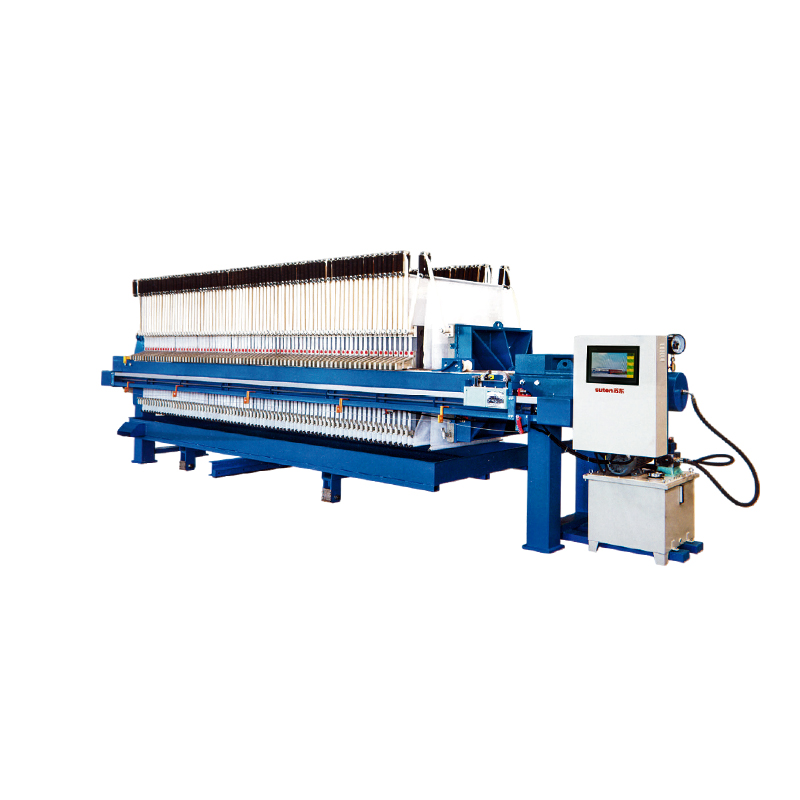
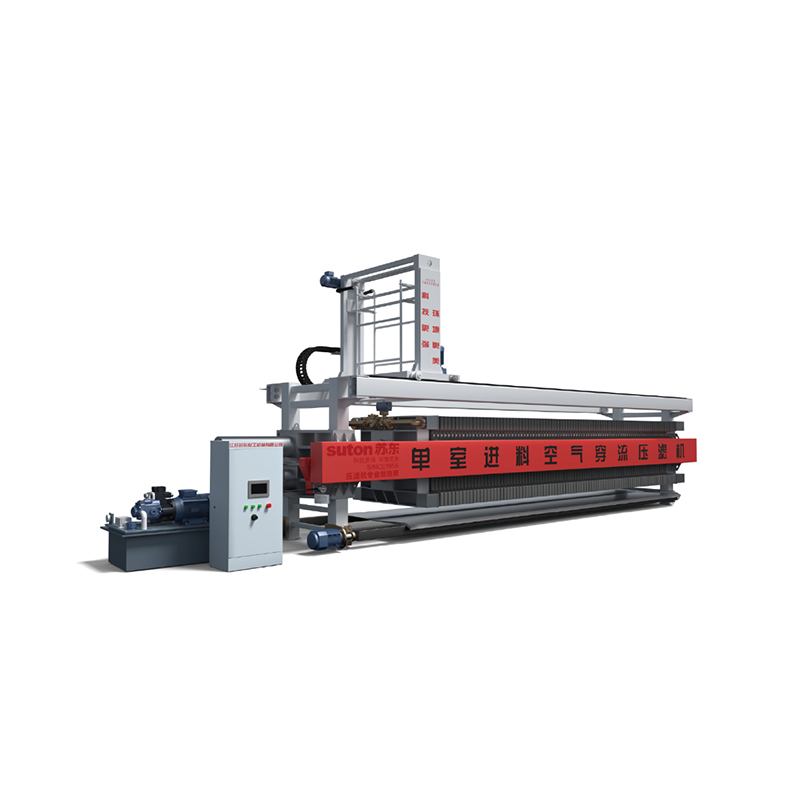
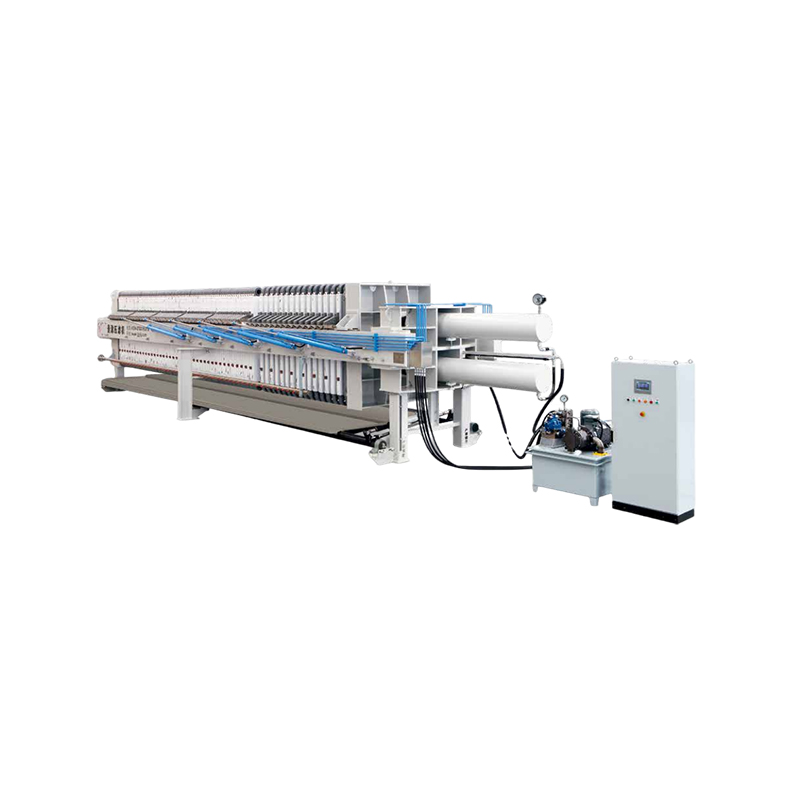
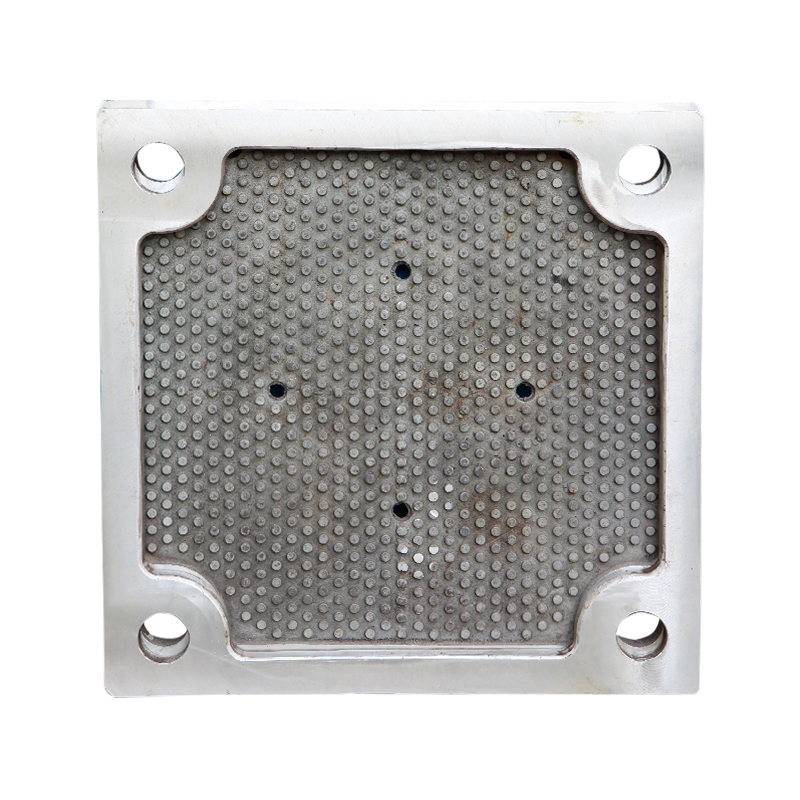
While several sludge dewatering methods exist, the plate-and-frame or membrane filter press maintains an irreplaceable position in industrial applications due to its superior performance.
|
Feature |
Sludge Press Machine (Plate) |
Belt Press |
Centrifuge |
|
Cake Dryness |
Highest (25-45% solids) |
Moderate (15-25%) |
Moderate (20-30%) |
|
Energy Consumption |
Low (Hydraulic power) |
Moderate |
High (Constant Rotation) |
|
Chemical (Polymer) Use |
Low to Moderate |
High |
High |
|
Filtrate Clarity |
Very High |
Moderate |
Moderate |
|
Maintenance |
Simple (Cloth/Plate) |
Complex (Belts/Rollers) |
Highly Complex |
4.1 Superiority in “Cake Dryness”
The mechanical pressure applied by a hydraulic cylinder is significantly higher than centrifugal force or gravity. This extreme pressure forces out “capillary water” that is physically impossible for belt presses or centrifuges to reach. For sludge that requires external incineration, a drier cake means higher calorific value and significantly lower processing costs.
5. Automation and Integration into Industry 4.0
The modern Sludge Press Machine is no longer a labor-intensive “clunky machine.” The integration of PLC (Programmable Logic Controller) systems has transformed it into a highly automated “set and forget” process.
5.1 Smart Sensors and Remote Monitoring
By integrating pressure transducers, ultrasonic level meters, and flow meters, modern filter presses can adjust pump speeds and cycle times in real-time based on the concentration of the incoming sludge. Operators can remotely monitor the entire dewatering cycle from a smartphone or a central control room, ensuring the equipment always runs at peak efficiency.
5.2 Reduced Human Exposure and Safety
In industries dealing with hazardous or pungent sludge (such as tannery waste or biological sewage), automated systems drastically reduce human contact. Automatic plate shifting systems, cloth washing devices, and automatic drip trays ensure on-site cleanliness and significantly enhance occupational health and safety standards.
6. The Future of Industrial Dewatering
The Sludge Press Machine is essential because it simultaneously addresses the three major challenges facing modern industry: Cost, Compliance, and Conservation. By transforming a liability (liquid waste) into a manageable solid and recyclable liquid, it provides unparalleled operational flexibility. As global environmental regulations continue to tighten and water scarcity becomes an urgent reality, the sludge press will remain the core driver of industrial wastewater treatment.
FAQ: Frequently Asked Questions
Q1: Why has the dewatering performance of my sludge press declined?
A: The most common reason is improper “conditioning.” If the type or dosage of the polymer (flocculant) is incorrect, the sludge may become too viscous or too loose, leading to rapid “blinding” of the filter cloth pores, which prevents water from escaping.
Q2: Can a sludge press handle oily sludge?
A: Yes, but specific configurations are required. Usually, oleophobic (oil-repellent) filter cloths are used, and a “pre-coat” of filter aids like Diatomaceous Earth (DE) is added before feeding to prevent oil from penetrating deep into the cloth fibers.
Q3: What is the impact of reducing cake moisture by just 1%?
A: For large-scale plants, every 1% reduction in moisture can mean hundreds of tons of waste volume reduction per year. This not only lowers transportation fees but also significantly lightens the economic burden of subsequent incineration or landfilling.
References
- Cheremisinoff, N. P. (2026). Handbook of Water and Wastewater Treatment Technologies.
- Industrial Waste Management Association. “Trends in Sludge Dewatering and Landfill Compliance.”
- Journal of Environmental Chemical Engineering. “Comparative Study of Mechanical Dewatering Systems for Industrial Biosolids.”
Contact Information
 No. 1, Sudong Road, Guxi Town, Taixing, Jiangsu, China
 +86-15720778188
 +86-523-87791016
 +86-523-87797781
 [email protected]

;void(0))