

 English
 Español
 हिंदी
हिंदी Tiếng Việt
Industry News

Woven vs. Non-Woven Filter Press Cloth: Key Differences Explained
 2026.09.28
 Industry News
Content
Woven vs. Non-Woven Filter Press Cloth
The key difference between woven and non-woven filter press cloth comes down to how the fibers are structured. Woven filter cloth is made by interlacing individual yarns (monofilament or multifilament) into a defined pattern, creating uniform, predictable pore openings and strong mechanical stability. Non-woven filter cloth (often felt) is made by mechanically or thermally bonding loose fibers together into a randomly oriented mat, resulting in a thicker material with a more tortuous, three-dimensional pore structure.
In practical terms: woven cloth generally offers better cake release, durability, and dimensional stability, while non-woven felt offers finer particle retention and higher filtration efficiency at the cost of harder cake discharge and shorter service life. The right choice depends almost entirely on your slurry's particle size, solids concentration, and how much moisture reduction you need. The rest of this article breaks down exactly why.
Structural Differences: How Each Cloth Is Made
Woven Filter Cloth
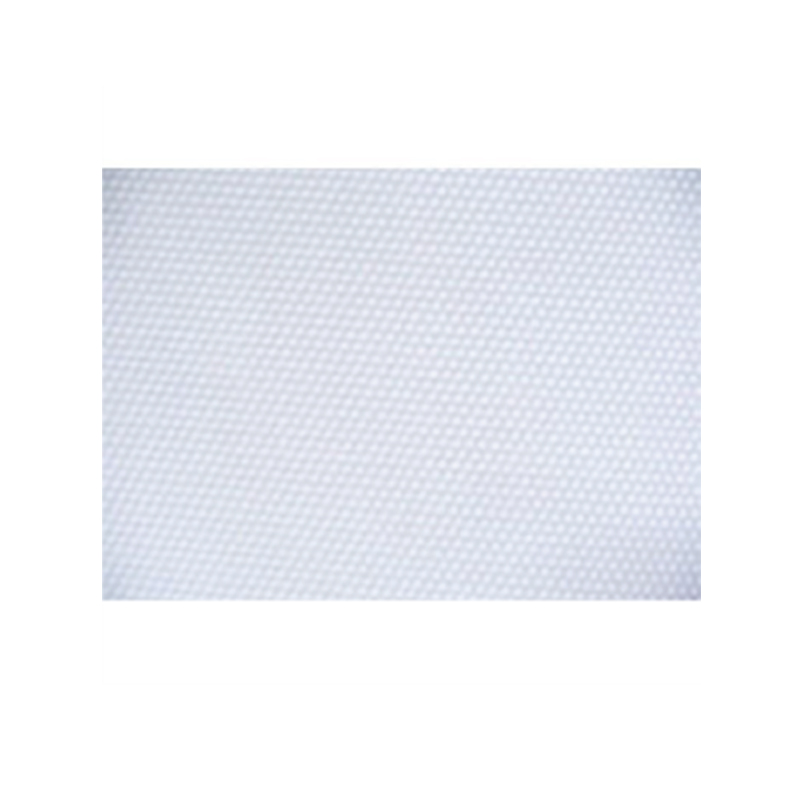
Woven cloth is produced on a loom, interlacing warp and weft yarns in patterns such as plain weave, twill weave, or satin weave. The yarns themselves can be monofilament (single, smooth strands) or multifilament (bundles of finer strands twisted together). Because the yarn positions are fixed by the weaving process, pore size and distribution remain highly consistent across the entire sheet.
Non-Woven Filter Cloth (Felt)
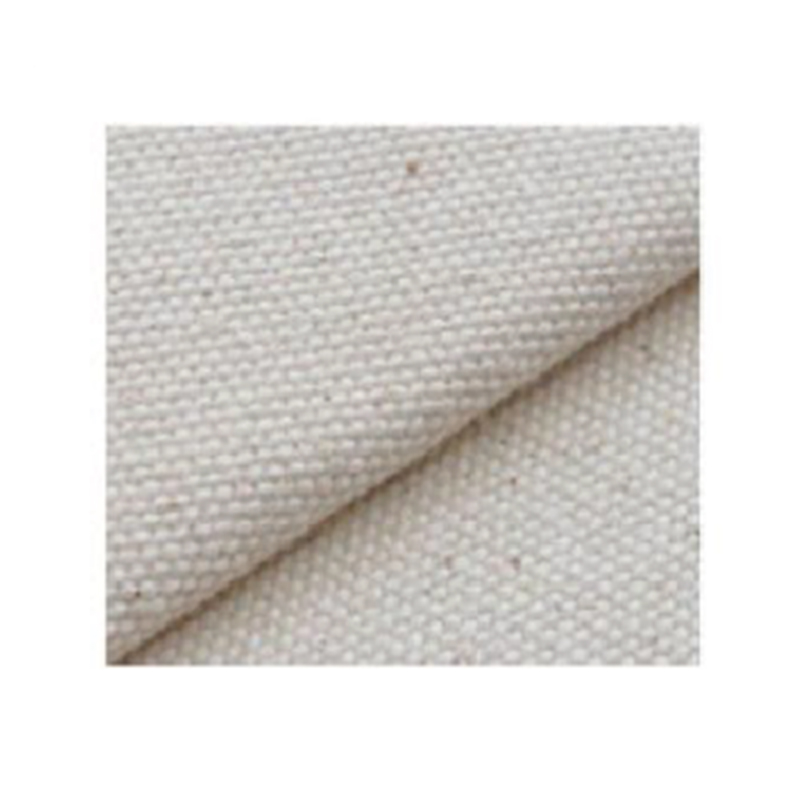
Non-woven felt is manufactured by carding and needle-punching or thermally bonding short staple fibers into a random, layered mat, typically 2mm to 5mm thick — noticeably thicker than most woven fabrics, which usually run between 0.3mm and 1mm. This randomness creates a depth-filtration effect, where particles get trapped throughout the material's thickness rather than just at the surface.
Side-by-Side Comparison
The table below summarizes the practical performance differences that matter most when selecting cloth for a filter press.
|
Performance comparison of woven and non-woven filter press cloth |
||
|
Property |
Woven Cloth |
Non-Woven Felt |
|
Filtration Type |
Surface filtration |
Depth filtration |
|
Typical Micron Rating |
10–100 microns |
1–20 microns |
|
Cake Release |
Easy, clean discharge |
More difficult, cake can stick |
|
Dimensional Stability |
High, minimal stretch |
Lower, can distort under pressure |
|
Typical Service Life |
Longer (100–300+ cycles) |
Shorter (50–150 cycles) |
|
Cleaning Ease |
Easier to wash/reuse |
More prone to blinding |
|
Relative Cost |
Lower to moderate |
Moderate to higher |
Filtration Efficiency: Which Catches Finer Particles?
Non-woven felt generally wins on raw filtration efficiency for fine particles. Because filtration happens throughout the fiber depth rather than just at the surface, felt can capture particles as small as 1 to 5 microns, compared to roughly 10 to 40 microns for standard woven fabrics. This makes felt the preferred choice for applications like fine chemical precipitates, pharmaceutical intermediates, or polishing filtration where clarity of the filtrate is critical.
However, this fine capture comes with a trade-off: felt's depth-filtration structure also traps particles more permanently within the material, which accelerates a problem called blinding — the progressive clogging of pores that reduces flow rate over time.
Cake Release and Discharge Performance
This is where woven cloth has a clear practical advantage. The smooth, even surface of woven fabric — especially monofilament weaves — allows the filter cake to separate cleanly when the plates open, often falling away with little or no manual scraping. Non-woven felt's fuzzy, fibrous surface tends to grip onto the cake, which can:
- Increase manual labor time during cake discharge
- Cause partial cake residue to remain on the cloth, reducing effective filtration area in the next cycle
- Lead to faster wear from repeated scraping or washing
For automated presses with cloth-shaking or automatic plate-shifting mechanisms, this difference matters even more — poor cake release from felt can cause jams or incomplete discharge cycles.
Durability and Service Life
Woven cloth, particularly monofilament polypropylene, typically lasts 100 to 300 filtration cycles depending on slurry abrasiveness and operating pressure. Its tight, interlocked structure resists stretching and tearing under repeated clamping pressure.
Non-woven felt tends to have a shorter working life, often 50 to 150 cycles, because the bonded fiber structure loosens over time under repeated compression and cleaning. Felt is also more susceptible to permanent deformation once it becomes saturated with fine particles that resist washing out.
Choosing the Right Type for Your Application
The right choice depends on what matters most in your specific process: throughput and cake handling, or filtrate clarity and fine particle capture.
Choose Woven Cloth When:
- Solids concentration is relatively high and particle size is coarse to medium
- Fast, clean cake discharge is a priority (e.g., mining, wastewater sludge)
- Cloth reuse and long service life are important for cost control
Choose Non-Woven Felt When:
- Particle size is very fine and filtrate clarity is critical
- The application involves polishing filtration or low-solids slurries
- Higher cloth replacement frequency is acceptable in exchange for filtration precision
Key Takeaways
Woven filter press cloth and non-woven felt aren't interchangeable — they're suited to different priorities. Woven cloth offers durability, easy cake release, and lower long-term cost, making it the default choice for most general industrial filtration. Non-woven felt offers finer particle capture and superior filtrate clarity, but requires more frequent replacement and careful management to avoid blinding. Matching cloth type to your slurry characteristics — particle size, solids concentration, and desired filtrate quality — is the single most important factor in filter press performance.
Contact Information
 No. 1, Sudong Road, Guxi Town, Taixing, Jiangsu, China
 +86-15720778188
 +86-523-87791016
 +86-523-87797781
 [email protected]

;void(0))