

 English
 Español
 हिंदी
हिंदी Tiếng Việt
Industry News

How to Choose the Right Filter Press Plates for Different Industries?
 2026.08.24
 Industry News
Content
- 1 Why Are Filter Press Plates So Important?
- 2 Start by Understanding Your Slurry Characteristics
- 3 Select the Right Plate Material
- 4 Match Plate Design to Your Industry
- 5 Mining Industry Requirements
- 6 Wastewater Treatment Applications
- 7 Chemical Processing Industry
- 8 Food and Beverage Industry
- 9 Pharmaceutical Industry
- 10 Ceramic and Clay Processing
- 11 Consider Filtration Pressure
- 12 Choose the Appropriate Plate Size
- 13 Evaluate Automation Requirements
- 14 Think About Maintenance and Service Life
- 15 Environmental and Sustainability Considerations
- 16 Work with an Experienced Manufacturer
- 17 FAQ
Selecting the right Filter Press Plates is one of the most important decisions when designing or upgrading a filtration system. While the filter press itself provides the mechanical force for solid-liquid separation, the filter plates determine the filtration area, cake formation, drainage efficiency, and overall operating performance.
Different industries process slurries with unique physical and chemical properties. Mining operations often handle abrasive, high-solid-content slurries, while pharmaceutical manufacturers require contamination-free filtration under strict hygienic standards. Wastewater treatment plants prioritize operational efficiency and low maintenance costs, whereas chemical processing facilities demand excellent corrosion resistance.
Because no single filter press plate is suitable for every application, understanding your industry’s filtration requirements is essential. This guide explains how to choose the right Filter Press Plates for different industries by evaluating slurry characteristics, material selection, plate design, operating conditions, and long-term performance.
Why Are Filter Press Plates So Important?
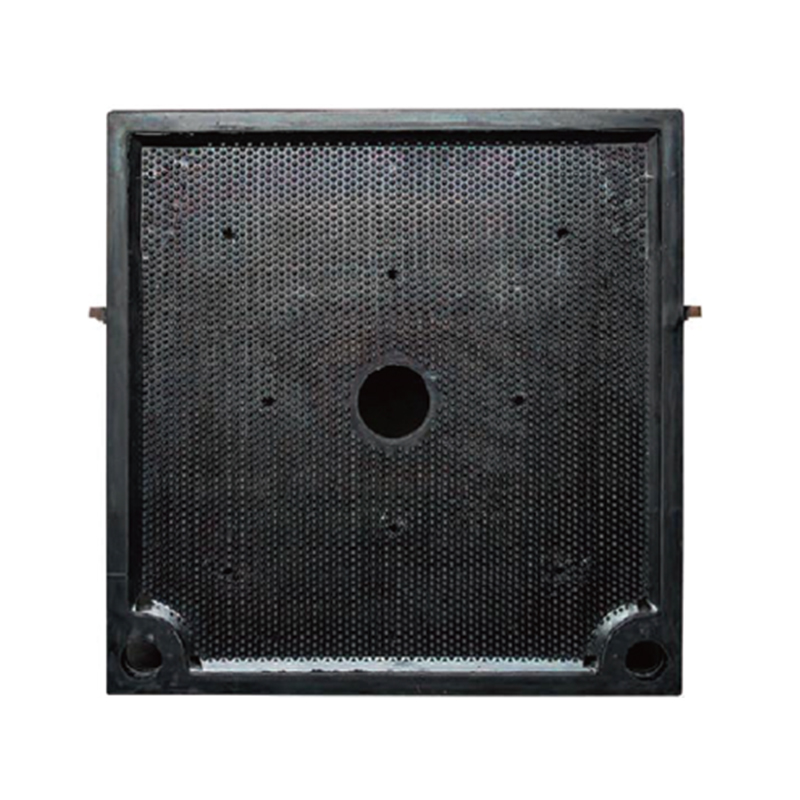
Filter Press Plates form the filtration chambers where slurry is separated into filtrate and filter cake. Their design directly influences:
- Filtration efficiency
- Filter cake dryness
- Filtration cycle time
- Operating pressure
- Chemical resistance
- Equipment durability
- Maintenance requirements
- Overall production costs
Choosing inappropriate filter plates may lead to slower filtration, excessive cloth wear, plate deformation, leakage, or reduced production capacity.
Therefore, selecting suitable Filter Press Plates should always be based on process conditions rather than price alone.
Start by Understanding Your Slurry Characteristics
Every filtration process begins with the slurry. The properties of the material being filtered determine which type of filter press plate will perform best.
Important slurry characteristics include:
- Solid concentration
- Particle size distribution
- Particle hardness
- Slurry viscosity
- Chemical composition
- pH value
- Temperature
- Abrasiveness
- Corrosiveness
- Moisture requirements
For example:
- Fine clay particles produce dense filter cakes that require plates with efficient drainage channels.
- Highly abrasive mining slurries demand wear-resistant plate materials.
- Corrosive chemical solutions require plates with excellent chemical resistance.
- Food-grade products require hygienic, contamination-free materials.
Providing complete slurry information enables manufacturers to recommend the most appropriate plate configuration.
Select the Right Plate Material
Material selection is one of the most critical factors when choosing Filter Press Plates.
Different materials offer different advantages.
|
Plate Material |
Advantages |
Typical Industries |
|
Polypropylene (PP) |
Excellent chemical resistance, lightweight, cost-effective |
Wastewater, chemicals, food processing |
|
Reinforced Polypropylene |
Higher mechanical strength |
Mining, metallurgy |
|
PVDF |
Outstanding corrosion resistance |
Strong acids, specialty chemicals |
|
Stainless Steel |
High temperature and sanitary performance |
Food, pharmaceutical |
|
Cast Iron |
High-temperature durability |
Metallurgy, special industrial processes |
Among these options, polypropylene remains the most widely used because it provides an excellent balance between durability, chemical resistance, and cost.
Match Plate Design to Your Industry
Different plate structures are designed for different filtration objectives.
Common Filter Press Plate types include:
|
Plate Type |
Best Applications |
|
Chamber Plates |
General industrial filtration |
|
Membrane Plates |
Low cake moisture applications |
|
Plate and Frame Plates |
Fine chemical filtration |
|
Recessed Plates |
High-capacity dewatering |
|
CGR Plates (Caulked Gasketed Recessed) |
Leak-free chemical processing |
|
Diaphragm Plates |
High-pressure cake squeezing |
Each design offers unique benefits depending on production requirements.
Mining Industry Requirements
Mining operations typically process large volumes of abrasive slurry containing coarse mineral particles.
Recommended features include:
- Reinforced polypropylene plates
- High-pressure resistance
- Wear-resistant surfaces
- Large filtration area
- Thick chamber design
- Strong mechanical stability
Mining applications usually prioritize maximum throughput and long equipment life.
Wastewater Treatment Applications
Municipal and industrial wastewater treatment plants focus on reducing sludge volume while minimizing operating costs.
Ideal Filter Press Plates should provide:
- High filtration efficiency
- Easy cake release
- Lightweight construction
- Chemical resistance
- Low maintenance
- Long service life
Automatic plate systems are increasingly popular because they reduce labor requirements and improve daily productivity.
Chemical Processing Industry
Chemical plants often process corrosive liquids under demanding operating conditions.
Key considerations include:
- Corrosion resistance
- Chemical compatibility
- High sealing performance
- Leak prevention
- Stable pressure resistance
For aggressive chemicals, reinforced polypropylene or PVDF plates are often preferred.
Food and Beverage Industry
Food processing requires filtration equipment that meets strict hygiene standards.
Recommended features include:
- Food-grade materials
- Smooth plate surfaces
- Easy cleaning
- Corrosion resistance
- Minimal contamination risk
Applications include:
- Sugar production
- Beverage clarification
- Edible oils
- Starch processing
- Brewing
- Fruit juice production
Sanitary design is often more important than maximum filtration capacity.
Pharmaceutical Industry
Pharmaceutical manufacturing demands exceptional cleanliness and process control.
Suitable Filter Press Plates should offer:
- High purity materials
- Excellent dimensional accuracy
- Easy sterilization
- Smooth internal surfaces
- Strict contamination control
Many pharmaceutical facilities require compliance with GMP manufacturing standards.
Ceramic and Clay Processing
Ceramic industries process highly fine particles with relatively high moisture content.
Recommended characteristics include:
- Excellent drainage channel design
- Uniform pressure distribution
- Durable polypropylene construction
- High-pressure capability
Efficient dewatering significantly reduces drying costs after filtration.
Consider Filtration Pressure
Different industries require different operating pressures.
|
Industry |
Typical Pressure Requirement |
|
Municipal wastewater |
Low to medium |
|
Mining |
Medium to high |
|
Chemical processing |
Medium |
|
Food processing |
Low to medium |
|
Pharmaceuticals |
Controlled pressure |
|
Ceramics |
High |
Filter Press Plates must withstand repeated pressure cycles without deformation.
Choose the Appropriate Plate Size
Plate dimensions determine filtration area and production capacity.
Common sizes include:
|
Plate Size |
Typical Application |
|
470 mm |
Laboratory |
|
500 mm |
Small production |
|
630 mm |
Medium production |
|
800 mm |
Industrial processing |
|
1000 mm |
Large production |
|
1250 mm |
Heavy-duty applications |
|
1500 mm |
High-capacity filtration |
|
2000 mm |
Mining operations |
Selecting plate size should be based on processing capacity rather than simply choosing the largest available model.
Evaluate Automation Requirements
Modern industrial filtration increasingly relies on automation.
Automatic systems may include:
- Automatic plate shifting
- Automatic cake discharge
- Automatic cloth washing
- PLC control
- Hydraulic automation
- Remote monitoring
Automation is particularly valuable for industries with continuous production schedules.
Think About Maintenance and Service Life
Maintenance costs can significantly affect long-term operating expenses.
High-quality Filter Press Plates should provide:
- Easy filter cloth replacement
- Wear-resistant surfaces
- Stable structural strength
- Low deformation rate
- Long service life
Routine inspections help prevent leakage and maintain filtration efficiency.
Environmental and Sustainability Considerations
Many industries are adopting more sustainable production practices.
Modern Filter Press Plates contribute by:
- Improving water recovery
- Reducing sludge volume
- Lowering disposal costs
- Increasing filter cake dryness
- Supporting wastewater recycling
- Reducing energy consumption
Selecting durable plates also reduces material waste by extending equipment lifespan.
Work with an Experienced Manufacturer
Choosing the right supplier is just as important as selecting the right Filter Press Plates. An experienced manufacturer can analyze slurry characteristics, production capacity, operating pressure, and industry-specific requirements to recommend the most suitable plate configuration.
Jiangsu Sudong Chemical Machinery Co., Ltd. specializes in the design and manufacture of high-performance Filter Press Plates for a wide range of industries, including mining, wastewater treatment, chemicals, food processing, pharmaceuticals, metallurgy, and environmental protection. By combining advanced manufacturing technology, durable materials, and customized engineering solutions, the company helps customers improve filtration efficiency, reduce maintenance costs, and extend equipment service life.
FAQ
Q1: Which material is most commonly used for Filter Press Plates?
A: Polypropylene (PP) is the most widely used material because it offers excellent chemical resistance, lightweight construction, durability, and cost-effectiveness across many industrial applications.
Q2: Are the same Filter Press Plates suitable for every industry?
A: No. Industries such as mining, chemicals, food processing, pharmaceuticals, and wastewater treatment have different slurry characteristics and operating requirements, so plate materials and designs should be selected accordingly.
Q3: How do I choose the correct Filter Press Plate size?
A: Plate size should be based on processing capacity, filtration area, available installation space, operating pressure, and future production expansion plans.
Q4: When should Filter Press Plates be replaced?
A: Replacement is recommended when plates show signs of cracking, deformation, excessive wear, sealing failure, or reduced filtration performance that cannot be resolved through maintenance.
Q5: Can customized Filter Press Plates improve filtration performance?
A: Yes. Customized plates with optimized chamber depth, drainage patterns, material selection, and sealing configurations can significantly improve filtration efficiency, reduce cycle time, enhance cake dryness, and lower overall operating costs for specific industrial applications.

Contact Information
 No. 1, Sudong Road, Guxi Town, Taixing, Jiangsu, China
 +86-15720778188
 +86-523-87791016
 +86-523-87797781
 [email protected]

;void(0))